
The young company will build its first industrial-scale plant at the Michelin Italiana S.p.A. facility in Cuneo, where it will install a Direct Air Capture (DAC) system to capture carbon dioxide already present in the air, allowing it to be used to replace a portion of the CO₂ currently sourced from external suppliers.
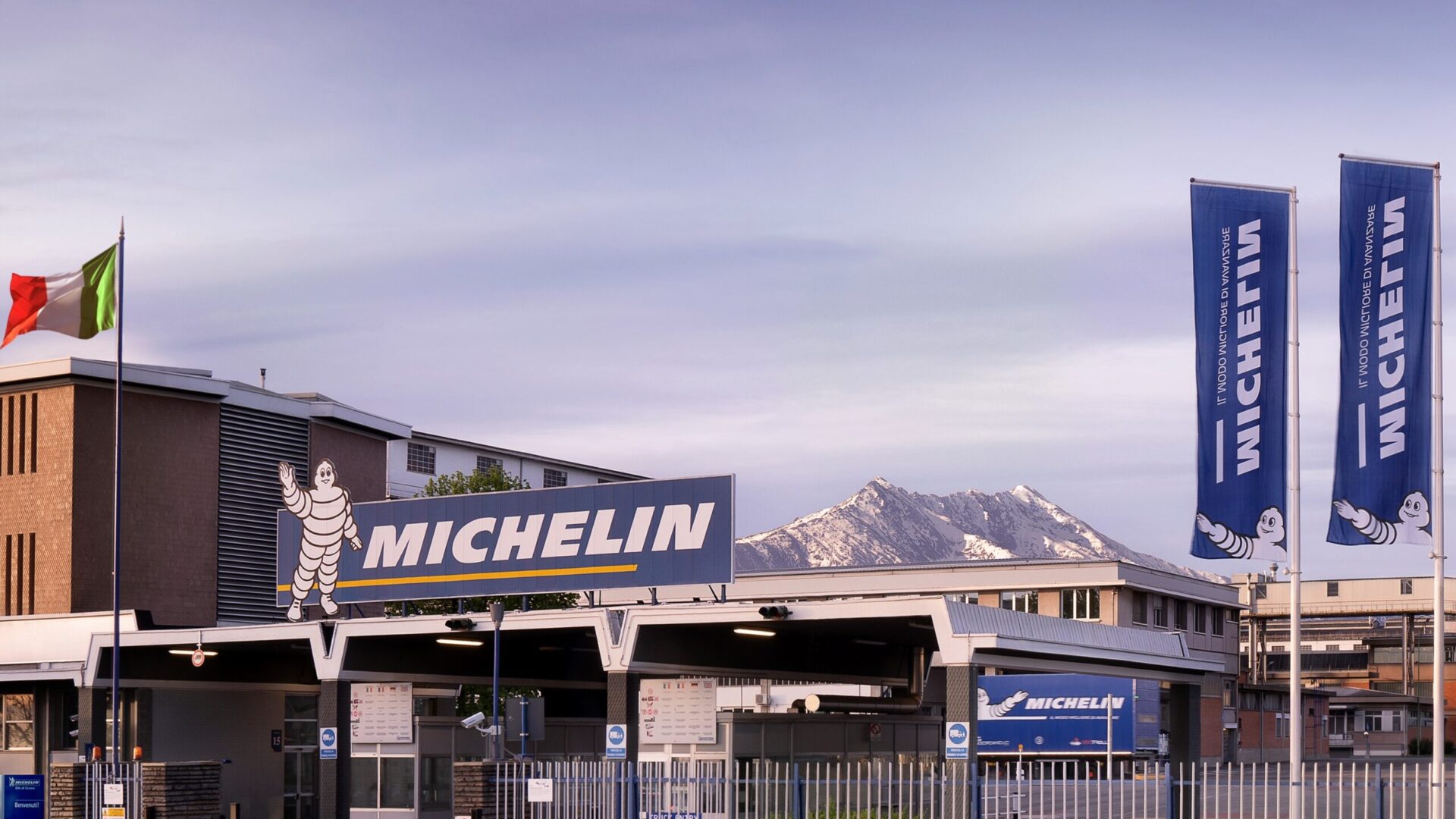
Milan/Cuneo, 23 October 2026 – A significant agreement has been reached between CarpeCarbon, an innovative startup specialising in the development of modular technologies and solutions for capturing and removing CO₂ from the atmosphere, and Michelin Italiana S.p.A, to develop an industrial project for the capture and valorisation of atmospheric CO₂. After demonstrating the validity of its cutting-edge technological solution with a pilot plant in Turin, CarpeCarbon will build its first Direct Air Capture (DAC) plant, integrated into an industrial production process, at the Michelin plant in Cuneo, the largest Michelin tyre production site in Western Europe.
Under the agreement, the project will make CO₂ captured directly from the atmosphere available for specific industrial applications on-site, helping to replace a portion of the carbon dioxide that the Michelin plant currently receives from external suppliers. Additionally, the portion of captured CO₂ not delivered to Michelin will be managed independently by CarpeCarbon and destined for permanent storage, thus completing the atmospheric removal process.
The plant will have a nominal capacity of 300 tonnes of CO₂ per year.
The DAC plant is expected to become operational in the second half of 2027.
For CarpeCarbon, the project is part of a development strategy that aims to bring its total capture capacity to 5,000 tonnes per year in 2028-2029 and to 50,000 tonnes per year from 2030. This growth model is based on modular plants that can be integrated directly into existing industrial sites, powered in part by waste heat available on-site, as well as stand-alone modular plants powered exclusively by solar heat.
CarpeCarbon and Michelin Italiana came into contact through the activities of the Michelin Development Foundation, which operates in the Piedmont region to foster the growth of new businesses and innovative entrepreneurial initiatives. CarpeCarbon was assisted by the law firm Fieldfisher Italy, with lawyers Diego Rigatti and Filippo Attanasio handling tech aspects, and Giorgio Castorina and Giorgia Mulinacci handling energy aspects.
Giuliano Antoniciello, co-founder and CEO of CarpeCarbon, states:
“Reducing CO₂ emissions is a necessary condition, but no longer sufficient to address the climate crisis. From the start of the Industrial Revolution to the present day, we have emitted billions of tonnes of fossil CO₂ burning coal, oil and gas, and a significant portion of those past emissions will have to be removed from the atmosphere. This is a mammoth undertaking, requiring maximum speed of action from everyone. To contribute to this goal, CarpeCarbon has developed an innovative approach to the problem: it is the production system itself that contributes to capturing atmospheric CO₂. Thanks to our innovation, CarpeCarbon’s DAC can be integrated into existing industrial infrastructure, contributing to the development of complementary solutions for emissions management and CO₂ removal. We have developed a proprietary technology, protected by three patents, and invested in the creation of a pilot plant. Being able to start implementing this plan alongside a leading industrial player like Michelin Italiana is vital for accelerating the subsequent phases of the technology’s industrial development. Our ultimate goal is for this to be the starting point for extending the model to many other production facilities in Italy, Europe, and worldwide.”
TECHNICAL BACKGROUND
The agreement
Due to its properties as an inert and non-reactive gas, CO₂ plays an essential role in the production process of many industrial plants for the inerting of specific equipment and processes. Today, the CO₂ required for these applications is generally purchased from external suppliers. The collaboration with CarpeCarbon introduces a change in the source of the CO₂ used. CarpeCarbon’s DAC plant captures carbon dioxide directly from the air, separates it from other atmospheric components, and makes it available for industrial applications.
A distinctive element of the project also concerns the energy required to operate the DAC plant. CarpeCarbon’s technology is designed to use low-temperature heat, including heat recovery from production processes and heat produced by solar thermal collectors. The collaboration project thus integrates DAC technology into an existing industrial context, valorising waste heat available on-site.
The CO₂ problem
Reducing emissions remains the priority for addressing climate change. However, to bring CO₂ concentrations back within safer climate thresholds, it will also be necessary to remove large quantities of carbon dioxide from the atmosphere in the coming decades. Today, global removal capacity is still insufficient compared to the required scale, and available technologies are often expensive, built on a case-by-case basis, and difficult to replicate rapidly.
Direct Air Capture (DAC) meets this need because it does not capture CO₂ at the source of emission, but extracts it directly from the air. The extracted CO₂ can be permanently stored—for example, through mineralisation in building materials or geological formations—or used as a raw material in various industrial processes.
It is important to distinguish between the two cases: using CO₂ is not equivalent to removing it permanently from the atmosphere. In many applications, such as carbonated drinks or inerting, the CO₂ is released again after use. The benefit then lies in replacing fossil-derived CO₂ with CO₂ captured from the atmosphere, avoiding the introduction of new carbon into the cycle. Permanent removal, however, requires the CO₂ to remain out of the atmosphere for very long periods, as occurs in mineralisation.
CO₂ is already an industrial raw material used on a global scale: world consumption is estimated at approximately 230 million tonnes per year, primarily for fertiliser production and enhanced oil recovery, as well as applications in the food, chemical, refrigeration, welding, industrial safety, and building materials sectors. However, the availability of commercial CO₂ can be volatile, as it is largely a by-product or co-product of other industrial processes. A source produced directly at the point of consumption can therefore help make supply more resilient, as well as reducing its carbon footprint.
CarpeCarbon: the solution for capturing and storing CO₂
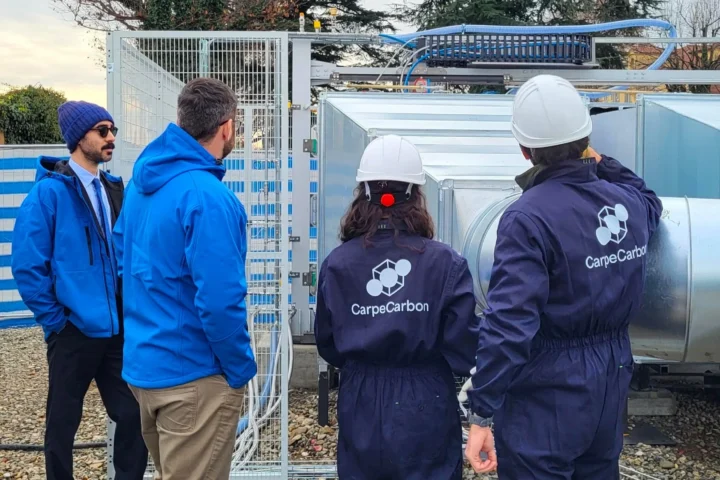
CarpeCarbon is an Italian company specialising in the development and commercialisation of Direct Air Capture (DAC) systems, the technology that allows CO₂ already present in the air to be captured directly from the atmosphere. The company has developed a proprietary technology based on solid sorbents, designed to minimise the energy consumption of capture through the use of low-temperature heat, such as industrial waste heat and solar heat. The CarpeCarbon solution is modular, automated, and remotely controllable, and has obtained CE marking; the company holds patents related to the DAC process, sorbents, and the design of adsorption and desorption modules. For carbon removal projects aimed at producing carbon credits, CarpeCarbon plans to permanently store CO₂ through mineralisation processes in basaltic rocks. In this process, CO₂ reacts spontaneously with minerals found deep within specific geological rock formations, transforming from a gas into a solid, stable form that remains fixed in the rock as a mineral permanently. The result is carbon credits, and CarpeCarbon is already developing its own geological storage capacity in Italy, given the country’s great potential. In December 2025, CarpeCarbon inaugurated its DAC pilot plant in Turin, reaching Technology Readiness Level 6 (TRL 6), the technological maturity required to commercialise the technology. With an approach oriented towards effective industrialisation and rapid scalability, CarpeCarbon aims to integrate DAC into industrial processes and transform atmospheric CO₂ into a resource for new circular carbon economy models and for the production of high-quality, certified, and verifiable permanent removal carbon credits.
Il Sole 24 Ore covers the agreement with Michelin, featuring an interview with our CEO: CO2 capture, agreement between CarpeCarbon and Michelin for first industrial plant
Press contacts
Angèlia Comunicazione
Simona Vecchies, Giorgia Fenaroli, Alessia Angarano